BOPEDI PRINTS
“Fashion rooted in culture”

Honouring my paternal great grandmother who passed on in 1989, 3 years before I was born; a woman whose teachings I became a beneficiary of her teachings, a woman who my father grew up referring to as “mma”. Just like many of our Bapedi/Matebele families, my family names children at birth after senior family members. Recently in 2021, my paternal grandmother was instructed to rectify the error oof not bestowing me with a name from the Kekana (Majaneng clan) and she named me after her mother Mokgothloa Malekere, sereto ke “Mogoshadi”.
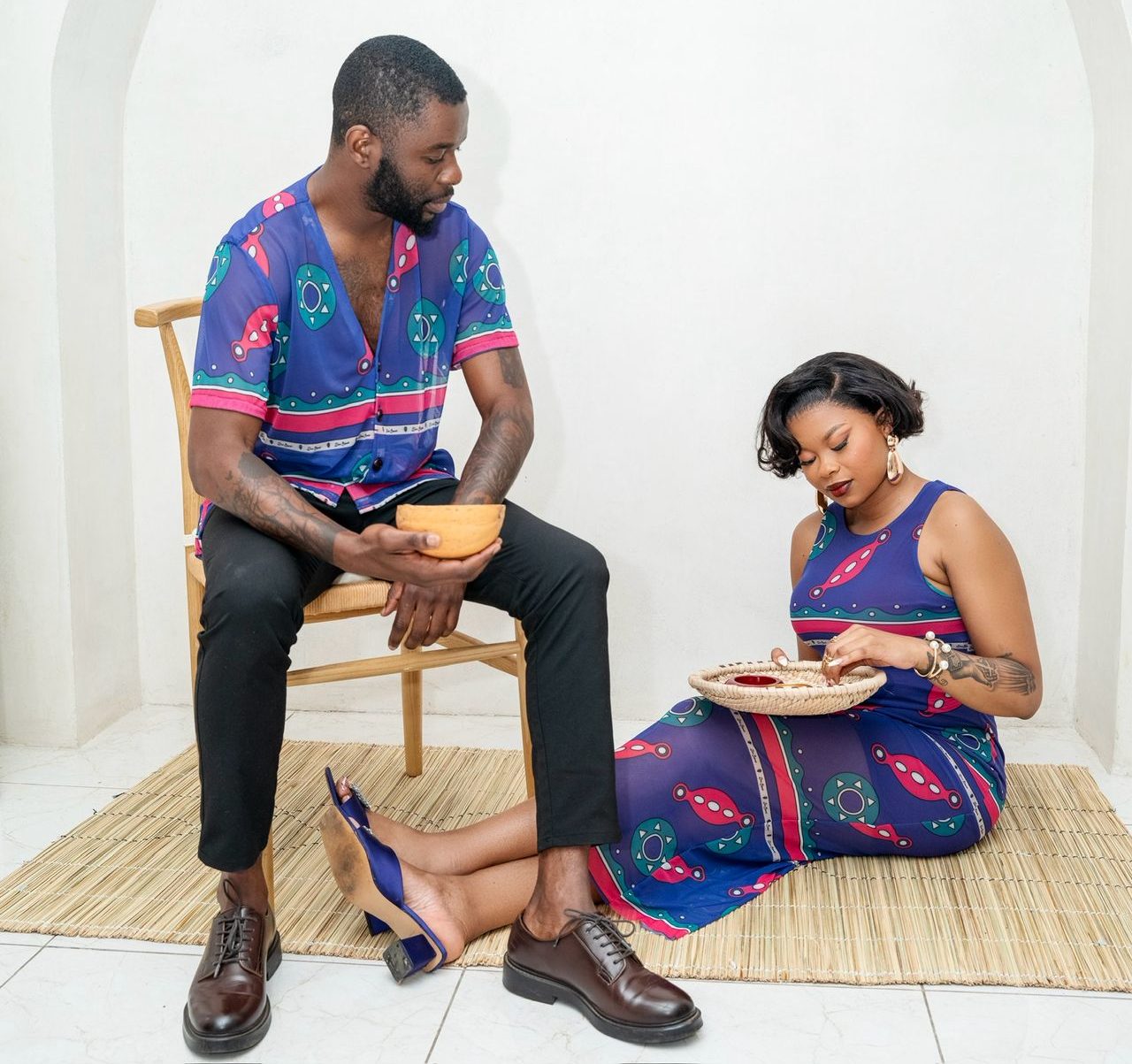
The print is inspired by the Bapedi and Matebele bright colours and a fabric called “motjeka”, bearing what could be referred to as the musical instruments. The colours are too loud and reflect our character as a loud nation and our music too, making it too difficult to not recognise us in any setting.

My proactive maternal grandmother could not wait for the other side to give me a name and named me after her mother, giving me sereto “Pheladi” and in her jovial mood she’d joyfully call me “Mmamotshato wa Mmirwa” and that was her mother’s name. a gentle soul whom I had the pleasure to meet, a woman whose spiritual and religious gifts I have come to inherit and enjoy; my religious background and lineage begins with her. This print is greatly inspired by the trademark of my village, bearing the colour orange that represents our citrus land “Zebediela di namuneng” and our ancient calabash used back in the days and to date during ceremonies to serve home brewed traditional beer (Jwala ba SeSotho).

Unfortunately for me, I have never had the pleasure of knowing my paternal grandfather and the closest thing I had to a grandfather were my father’s uncles and Phaahle ke seretp, his name was “Makgomokgomo”; a man whom I borrow my looks from, a man who loved and cared for me like his own grandchild. He lived with my grandmother at their parent’s home and occupied one of the rondavels out of the 2 that are in the yard, it was brown in colour, he always sat on the stoep outside of it with his old radio listening to Thobela FM. This print is greatly inspired by that, the natural oak colour with patterns that normally appear painted on our huts; representing the natural soil of our land that bears food harvested by our great grandparents.

My answered prayer, Mphatlalatsane my first child; that morning bright star that appears at dawn symbolising sunrise and hope for a brighter day. My paternal grandmother named her after Mogoshadi’s first child, Maletsatsi, sereto ke MaNgwato; this was my father’s eldest uncle and in celebrating this miracle child, my grandmother sees her son’s first grandchild and sings to her “Maletsatsi la go fisha tshiritshiri la Moletlane”. The print bears a colour that reminds us of the great and hot sun of the Limpopo province, bright as my daughter. The greenery of the lands of Limpopo, famous for its supply of food security in our country, sometimes relying on the great and hot sun for survival.